Buy atseo.eu ?
We are moving the project
atseo.eu .
Are you interested in purchasing the domain
atseo.eu ?
domain@kv-gmbh.de · 0541-91531010
Buy atseo.eu ?
How are artificial variables used in linear optimization?
Artificial variables are used in linear optimization to help convert an inequality constraint into an equality constraint. They are introduced to the objective function to ensure that the initial feasible solution is non-negative. Once the optimal solution is found, the artificial variables are removed from the final solution to obtain the true optimal solution to the linear programming problem. Overall, artificial variables play a crucial role in the initial phase of solving a linear optimization problem by helping to establish a feasible starting point for the algorithm. **
What are river variables and potential variables?
River variables are physical, chemical, and biological characteristics of a river that can be measured and monitored to assess its health and quality. These variables include parameters such as water temperature, pH levels, dissolved oxygen, nutrient concentrations, and the presence of pollutants. Potential variables are factors that can influence or impact the river variables, such as land use practices, urban development, agricultural runoff, and climate change. Understanding both river variables and potential variables is essential for effective river management and conservation efforts. **

Similar search terms for Variables
Top-Angebote
Products related to Variables:
-
Flythe Consulting Arika Wall Sconce Pair, Pair, Satin NickelThe Arika Wall Sconce Pair is an adaptation of old-fashioned light fixtures, with an appealing design that will complement modern decor. The lacquered solid brass sconces have 4.75 dia.x7 H clear glass hurricanes that will protect your standard...179,00 $*Shipping: 22,95 $Secure redirect to the provider
-
Flythe Consulting Brookville Wall Sconce Pair Antique Brass, Pair, Antique BrassThe Brookville Antique Brass Wall Sconce Pair uses simple design and a delicate aesthetic to create a truly elegant appeal. Each handcrafted, solid lacquered brass sconce has a scrolling arm, solid backplate, chain accents, and a 6 dia.x9 H etched...324,99 $*Shipping: 0,00 $Secure redirect to the provider
-
Flythe Consulting Jonetia Hurricane Wall Sconce Pair Satin Brass, Pair, Satin BrassThe Jonetia Satin Brass Hurricane Wall Sconce Pair proudly displays grandeur on your walls. These hand-forged, solid brass sconces feature a diamond design and fleur-de-lis motif. Sconces have a lacquered, satin brass finish that is done by hand. A...229,00 $*Shipping: 32,06 $Secure redirect to the provider




-
What is the difference between primitive variables and reference variables?
Primitive variables store the actual value, such as numbers or characters, directly in memory. Reference variables, on the other hand, store a reference to an object in memory rather than the actual value. This means that when working with reference variables, you are actually working with the object that the reference points to, while with primitive variables, you are working directly with the value stored in memory. Additionally, primitive variables are allocated on the stack, while reference variables are allocated on the heap. **
-
What is the difference between ordinal scaled variables and ordinal variables?
Ordinal scaled variables are variables that have a specific order or ranking, but the intervals between the values are not necessarily equal. On the other hand, ordinal variables are variables that have categories with a natural order, but the numerical values assigned to them do not have any meaningful interpretation. In summary, ordinal scaled variables have meaningful numerical values with a specific order, while ordinal variables have categories with a natural order but lack meaningful numerical values. **
-
What are random variables?
Random variables are variables that can take on different values based on the outcome of a random event. They represent the possible outcomes of a random process and are used in probability theory and statistics to quantify uncertainty. Random variables can be discrete, taking on a finite number of values, or continuous, taking on any value within a range. They are essential for modeling and analyzing uncertain situations in various fields such as finance, engineering, and biology. **
-
What are reduced variables?
Reduced variables are a set of transformed variables that are used to simplify the analysis of a system or process. These variables are often obtained by scaling or normalizing the original variables to make them more manageable and easier to interpret. By using reduced variables, complex systems can be analyzed and understood more effectively, leading to better insights and decision-making. **


How do I solve an equation with form variables and solution variables?
To solve an equation with form variables and solution variables, you first need to isolate the solution variable on one side of the equation. This involves performing the necessary operations (addition, subtraction, multiplication, division) to move all other variables to the other side of the equation. Once you have isolated the solution variable, you can then solve for it by performing any additional operations needed to simplify the equation. Finally, you can substitute the solution back into the original equation to verify that it satisfies the equation. **
What is a local variable and what is the difference to instance variables, class variables, and normal variables in Java?
A local variable in Java is a variable that is declared within a method, constructor, or block of code and is only accessible within that specific scope. It is temporary and exists only for the duration of the method execution. The main difference between local variables, instance variables, class variables, and normal variables in Java is their scope and lifetime. Instance variables are declared within a class but outside of any method and are accessible to all methods within the class. Class variables are declared with the static keyword and are shared among all instances of a class. Normal variables refer to any variable that is not a local, instance, or class variable. **
Top-Angebote
Products related to Variables:
-
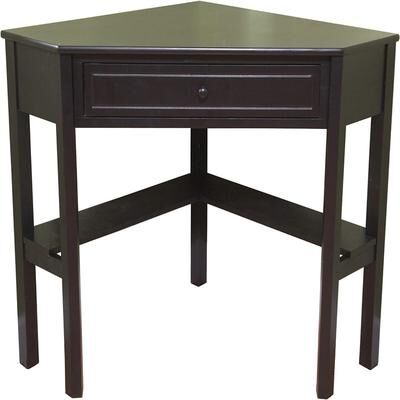
No Marketing Systems Wood Corner Desk"The corner desk measures 42"" X 28"" X 30"" And Weighs 42 lbs. Arrives with only minimal Assembly required. Comfortably fitting in any home, studio, apartment, and office, The small corner writing desk maximizes space in compact rooms."257,04 $*Shipping: 0,00 $Secure redirect to the provider
-
HARPERCOLLINS Donald Miller 3 Book Collection Set – Business Made Simple, Marketing Made Simple & How to Grow Your Small Business Entrepreneurship & Marketing GuiDonald Miller Collection 3 Books Set (How to Grow Your Small Business, Business Made Simple, Marketing Made Simple): How to Grow Your Small Business: Speak to the heart of your target audience and create a movement around your mission or campaign through this comprehensive, step-by-step approach to crafting messages that resonate. Donald Miller, author of the bestselling Building a StoryBrand, has helped thousands of individuals, corporations, and justice-oriented organizations turn vision into action using the organized, easy to implement communication framework outlined in these pages. Business Made Simple: Donald Miller knows that business is more than just a good idea made profitable it s a system of unspoken rules, rarely taught by MBA schools. If you are attempting to profitably grow your business or career, you need elite business knowledge knowledge that creates tangible value. Even if you had the time, access, or money to attend a Top 20 business school, you would still be missing the practical knowledge that propels the best and brightest forward. Marketing Made Simple: Donald Miller, is a must-have for any marketing professional or small business owner who wants grow their business.It will teach you how to create and implement a sales funnel that will increase traffic and drive sales. Every day, your company is losing sales simply because you do not have a clear path to attract new customers. You’re not alone. Based on proven principles from Building a StoryBrand , this 5-part checklist is the ultimate resource for marketing professionals and business owners as they cultivate a sales funnel that flows across key customer touchpoints to effectively develop, strengthen, and communicate their brand’s story to the marketplace.18,99 £*Shipping: 2,99 £Secure redirect to the provider
-
Flythe Consulting Arika Wall Sconce Pair, Pair, Satin NickelThe Arika Wall Sconce Pair is an adaptation of old-fashioned light fixtures, with an appealing design that will complement modern decor. The lacquered solid brass sconces have 4.75 dia.x7 H clear glass hurricanes that will protect your standard...179,00 $*Shipping: 22,95 $Secure redirect to the provider
-
How are artificial variables used in linear optimization?
Artificial variables are used in linear optimization to help convert an inequality constraint into an equality constraint. They are introduced to the objective function to ensure that the initial feasible solution is non-negative. Once the optimal solution is found, the artificial variables are removed from the final solution to obtain the true optimal solution to the linear programming problem. Overall, artificial variables play a crucial role in the initial phase of solving a linear optimization problem by helping to establish a feasible starting point for the algorithm. **
-
What are river variables and potential variables?
River variables are physical, chemical, and biological characteristics of a river that can be measured and monitored to assess its health and quality. These variables include parameters such as water temperature, pH levels, dissolved oxygen, nutrient concentrations, and the presence of pollutants. Potential variables are factors that can influence or impact the river variables, such as land use practices, urban development, agricultural runoff, and climate change. Understanding both river variables and potential variables is essential for effective river management and conservation efforts. **
-
What is the difference between primitive variables and reference variables?
Primitive variables store the actual value, such as numbers or characters, directly in memory. Reference variables, on the other hand, store a reference to an object in memory rather than the actual value. This means that when working with reference variables, you are actually working with the object that the reference points to, while with primitive variables, you are working directly with the value stored in memory. Additionally, primitive variables are allocated on the stack, while reference variables are allocated on the heap. **
-
What is the difference between ordinal scaled variables and ordinal variables?
Ordinal scaled variables are variables that have a specific order or ranking, but the intervals between the values are not necessarily equal. On the other hand, ordinal variables are variables that have categories with a natural order, but the numerical values assigned to them do not have any meaningful interpretation. In summary, ordinal scaled variables have meaningful numerical values with a specific order, while ordinal variables have categories with a natural order but lack meaningful numerical values. **
Similar search terms for Variables
-
Flythe Consulting Brookville Wall Sconce Pair Antique Brass, Pair, Antique BrassThe Brookville Antique Brass Wall Sconce Pair uses simple design and a delicate aesthetic to create a truly elegant appeal. Each handcrafted, solid lacquered brass sconce has a scrolling arm, solid backplate, chain accents, and a 6 dia.x9 H etched...324,99 $*Shipping: 0,00 $Secure redirect to the provider
-
Flythe Consulting Jonetia Hurricane Wall Sconce Pair Satin Brass, Pair, Satin BrassThe Jonetia Satin Brass Hurricane Wall Sconce Pair proudly displays grandeur on your walls. These hand-forged, solid brass sconces feature a diamond design and fleur-de-lis motif. Sconces have a lacquered, satin brass finish that is done by hand. A...229,00 $*Shipping: 32,06 $Secure redirect to the provider
-
Classic Editions The Complete Art of War – 8 Book Hardback Box Set Sun Tzu & Ancient Chinese Military Strategy Classics Leadership, Warfare & Strategy CollectionExplore centuries of strategic thinking with The Complete Art of War – 8 Books Collection Hardback Box Set, an impressive collection of classical Chinese writings on warfare, leadership, tactics and strategy. Bringing together influential works from ancient Chinese military thought, this hardback collection includes titles such as The Art of War, Methods of the Sima, Wuzi, Wei Liaozi, Three Strategies of Huang Shigong, and Six Secret Teachings of Taigong, alongside additional works included in the eight-volume set. These enduring texts examine subjects including leadership, planning, discipline, intelligence, diplomacy, battlefield tactics and strategic decision-making. Although written in the context of ancient warfare, many of their principles have subsequently attracted readers interested in history, leadership and strategic thinking. Presented as an 8-volume hardback boxed collection, the set is ideal for readers of military history, students of classical philosophy and collectors of beautifully presented classic works. Why Readers Will Love This Collection Includes 8 hardback volumes in a collectible box set Features influential works of ancient Chinese military strategy Explores strategy, leadership, tactics and decision-making Excellent addition to military history and philosophy collections Attractive hardback format for a home or study library Ideal gift for history, strategy and classic literature enthusiasts The Complete Art of War 8 Book Collection brings together some of history's most enduring works on strategy in one impressive hardback set. Titles In This Set: Notebook Questions and Replies Three Strategies of Huang Shigong Wuzi Wei Liaozi The Methods of The Sima Six Secret Teachings of Taigong The Art of War16,99 £*Shipping: 2,99 £Secure redirect to the provider
-
Multisell Products Hub Easy To Play Chess Board Game Toy, Educational Strategy Table Games Easy To Play Chess Board Game Toy, Educational Strategy Table GamesEngage Your Mind with a Classic Chess Board Game The Chess Board Game Toy is a timeless strategy game that offers endless fun for both beginners and experienced players. Designed to be easy to play, this game is perfect for improving focus,...49,97 $*Shipping: 0,00 $Secure redirect to the provider
-
What are random variables?
Random variables are variables that can take on different values based on the outcome of a random event. They represent the possible outcomes of a random process and are used in probability theory and statistics to quantify uncertainty. Random variables can be discrete, taking on a finite number of values, or continuous, taking on any value within a range. They are essential for modeling and analyzing uncertain situations in various fields such as finance, engineering, and biology. **
-
What are reduced variables?
Reduced variables are a set of transformed variables that are used to simplify the analysis of a system or process. These variables are often obtained by scaling or normalizing the original variables to make them more manageable and easier to interpret. By using reduced variables, complex systems can be analyzed and understood more effectively, leading to better insights and decision-making. **
-
How do I solve an equation with form variables and solution variables?
To solve an equation with form variables and solution variables, you first need to isolate the solution variable on one side of the equation. This involves performing the necessary operations (addition, subtraction, multiplication, division) to move all other variables to the other side of the equation. Once you have isolated the solution variable, you can then solve for it by performing any additional operations needed to simplify the equation. Finally, you can substitute the solution back into the original equation to verify that it satisfies the equation. **
-
What is a local variable and what is the difference to instance variables, class variables, and normal variables in Java?
A local variable in Java is a variable that is declared within a method, constructor, or block of code and is only accessible within that specific scope. It is temporary and exists only for the duration of the method execution. The main difference between local variables, instance variables, class variables, and normal variables in Java is their scope and lifetime. Instance variables are declared within a class but outside of any method and are accessible to all methods within the class. Class variables are declared with the static keyword and are shared among all instances of a class. Normal variables refer to any variable that is not a local, instance, or class variable. **
* All prices are inclusive of VAT and, if applicable, plus shipping costs. The offer information is based on the details provided by the respective shop and is updated through automated processes. Real-time updates do not occur, so deviations can occur in individual cases. ** Note: Parts of this content were created by AI.